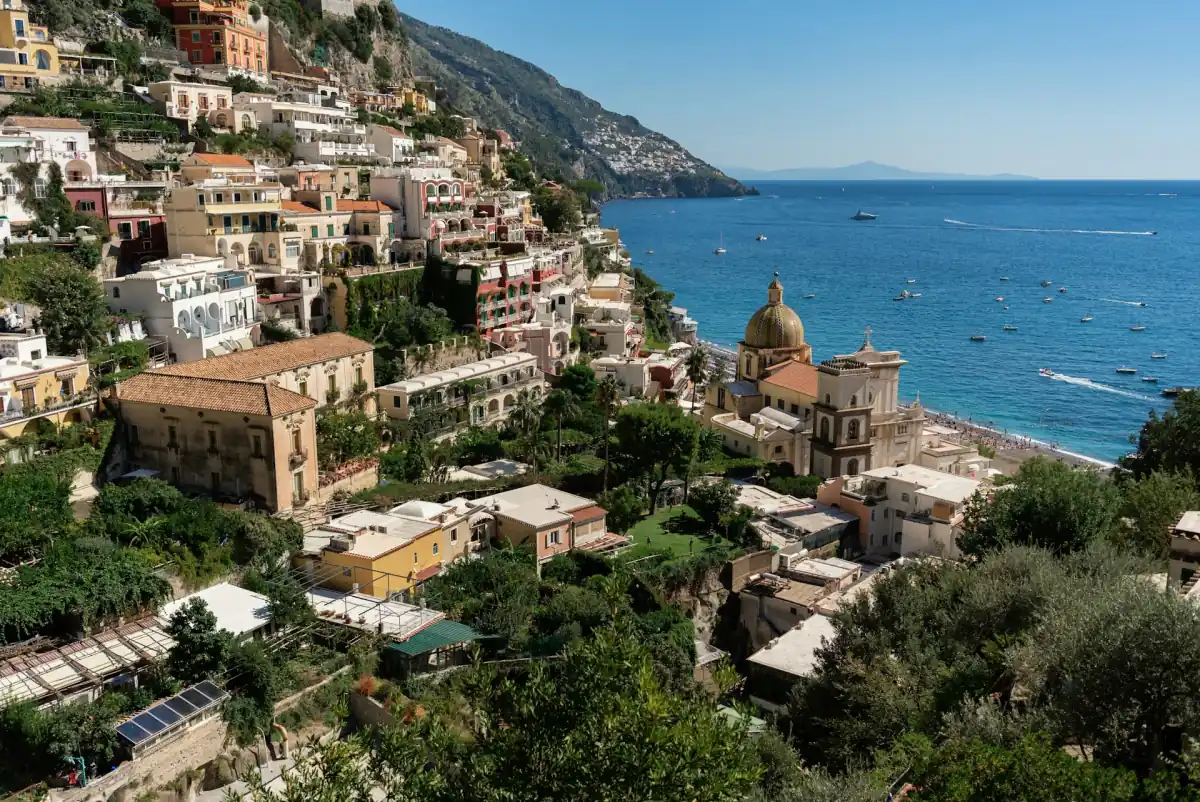
Positano beyond the hillside view
Positano rises above the water in a network of lanes and numerous stairways. Its vertical layout shapes a visit as much as its familiar coastal view: the address where you arrive, the route down to the shore and the climb back deserve attention. Choose whether your day is mainly about walking through town, visiting the Roman museum or spending time beside the sea. That decision makes it easier to leave enough room for the return journey.
Santa Maria Assunta stands near Marina Grande, with a colourful majolica dome that helps orient a walk through the lower town. Seeing the church from the streets, joining a town walk and visiting the archaeological site are different activities. Keep a booked museum appointment as the fixed point in your plan, then use the surrounding time for the lanes and the waterfront.
If you are comparing places before choosing a base, consider the actual route between your accommodation and transport. A hillside address and a shoreline arrival can involve quite different walks. The guide to coastal accommodation areas explains how to think about location without relying on a town name alone.

Our picks: Positano
Meet locals and learn about Positano on this walk.
Hand-picked tours, booked through Viator. Prices are indicative starting prices in euros (as of November 2026). Tap a tour for live availability and the current price in your currency.

A local walking tour of Positano
Explore the town on foot from the Chiesa Nuova area, with local culture at the centre of the experience. Museum and church admission are separate.
Walking tour through Positano
The local walking excursion starts at the Chiesa Nuova crossroads, an area served by coastal and local buses. It is a way to give the town walk a clear starting point rather than arriving at the waterfront and improvising every turn. The experience focuses on local culture and encounters with residents. Gastronomic stops are on request; treat food as a separate choice rather than building the day around an included meal.
Choose this format if the streets themselves are your main interest. It is a town walk, while the Path of the Gods is a mountain walking route with exposed sections. Those activities ask for different preparation. If you want both during a coastal stay, give each its own plan rather than treating the town walk as a substitute for hiking preparation.
Santa Maria Assunta and the Roman villa at MAR
The Roman villa lies below the Santa Maria Assunta and Piazza Flavio Gioia area. It gives the lower town an archaeological dimension alongside the church and the shore. From 4 November 2026, a newly opened excavation area in Via Rampa Teglia forms part of the MAR route. A reservation is required and the museum visit is guided. Arrange the museum directly as a distinct visit, separate from the walking excursion.
The museum’s ticket page lists admission at EUR 15 per person, read in November 2026. Its purchase conditions specify payment by bank or credit card rather than cash. For a step-free approach, the route through the church depends on the church being open, so contact the museum about your access needs. Do not choose an arrival connection that leaves no room to reach the entrance and settle in before your reserved visit.
Marina Grande, Fornillo and boat plans
Marina Grande is close to Santa Maria Assunta and provides the shoreward focus of a town visit. Fornillo is a pebble and shingle beach with access on foot. A beach name alone does not explain the approach from your accommodation or the conditions for swimming that day. Decide how much walking you want to add after exploring the stepped town, and follow the local notices when you reach the beach.
For time on the water, compare the coastal boat excursions by departure point and included activities. A ferry ticket and an excursion serve different purposes. Keep the shore walk flexible around a booked departure, and allow for sea conditions rather than promising yourself a swim as an essential part of every boat journey.
Arriving by bus or ferry
The coastal bus network links Amalfi, Positano and Sorrento. Ferry connections depend on the individual route, season and sea weather. These are useful alternatives to planning the whole visit around a car, but the exact stop or pier still matters. Compare the arrival options before deciding which direction to walk through town.
If your next stop is Amalfi, leave enough flexibility for the connection and keep its cathedral visit separate from the Positano museum appointment. A slower plan with a clear main visit avoids turning every transfer into a deadline. When staying overnight, use the same logic for the journey with luggage as for your sightseeing walks.


Questions about visiting Positano
Is the walking tour a MAR ticket?
The local walk focuses on Positano and local culture. Reserve the guided museum visit separately if the Roman villa is part of your plan.
How do I plan for the steps?
Look at the route between your arrival point, accommodation and chosen sights. Avoid judging the walk by the straight-line distance alone, especially when carrying luggage.
Which beaches can I consider?
Marina Grande and Fornillo are options in Positano. Fornillo is a pebble and shingle beach reached on foot; follow current local advice for bathing conditions.