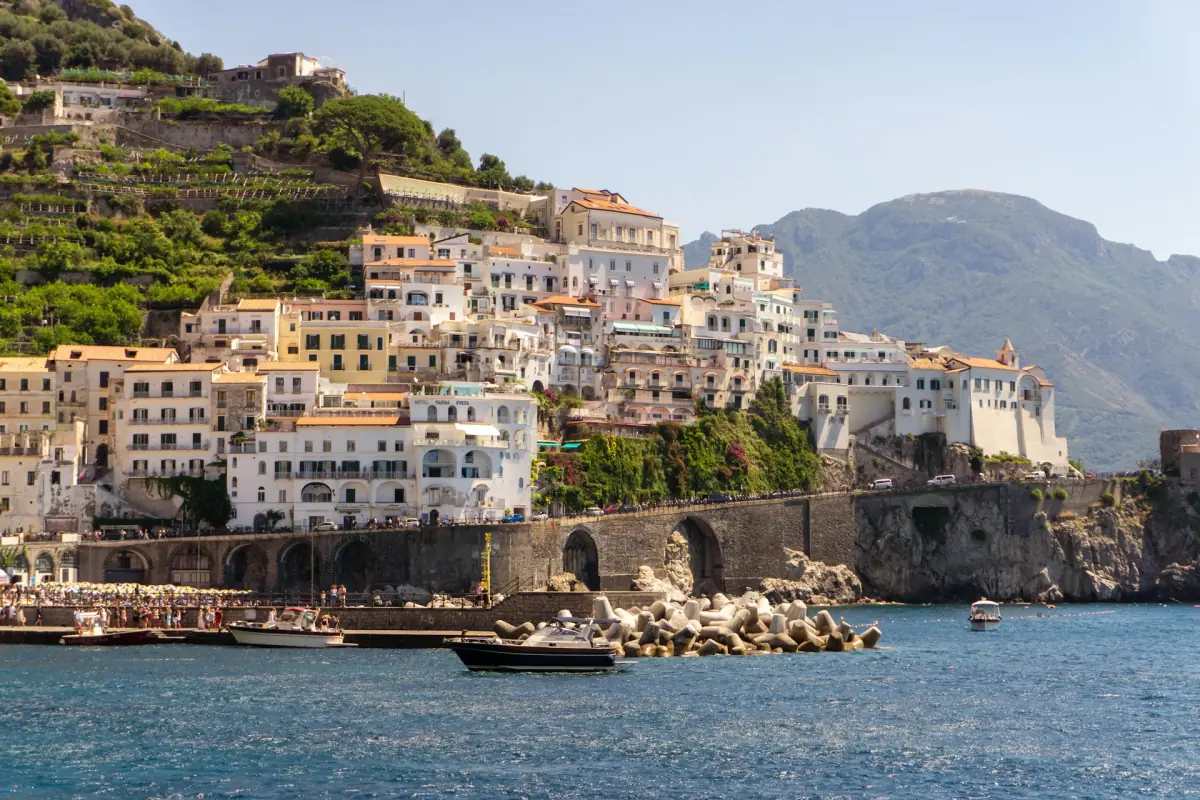
A visit to Amalfi town
Amalfi town brings the cathedral complex and harbour into the same visit, but each deserves its own place in the day. Start by deciding whether you want to explore the monuments or use the town mainly as a coastal connection. If the cathedral is your priority, plan the visit first and choose your onward journey afterwards. That leaves space for the staircase, the different parts of the complex and a pause before returning towards the water.
The town was a maritime republic, and its cathedral provides a focused way into that history. The complex comprises the Chiostro Paradiso, the diocesan museum in the Basilica del Crocifisso, the crypt and the cathedral of Sant’Andrea. These are the core sights for a monument-led visit. For a wider account of maritime power and the coastal landscape, continue to the history guide.
The monument’s approach matters as well as the time inside. A monumental staircase leads from Piazza Duomo to the raised atrium. Consider the steps before fixing a visit for someone with access needs. A connection to the harbour is only part of the journey; the route from the arrival point to the cathedral still belongs in your plan.
Our picks: Amalfi
This Naples departure includes a stop in Amalfi.
Hand-picked tours, booked through GetYourGuide. Prices are indicative starting prices in euros (as of November 2026). Tap a tour for live availability and the current price in your currency.

A Naples excursion with a stop in Amalfi
Travel by minibus with a driver and guide, including stops in Sorrento, Amalfi and Ravello and a panoramic stop for Positano views. Cathedral admission is separate.
The Amalfi Coast cathedral and its complex
The Chiostro Paradiso, or Cloister of Paradise, is one part of the cathedral complex. The diocesan museum occupies the Basilica del Crocifisso, while the crypt preserves relics of Saint Andrew. The cathedral itself completes the group. Decide how central these interiors are to your visit rather than assuming a short town stop leaves enough time for everything you want to see.
The cathedral’s architectural layers also repay attention. The exterior has a neo-medieval facade, while much of the interior is Baroque. Its history includes the foundation in 987, the donation of bronze doors from Constantinople in 1060 and the order to build the cloister in 1268. These dates help explain why the building is more than a single-period landmark, without needing to turn the town visit into a complete history lesson.
Published visiting times and the winter cycle
The municipal tourism portal publishes an undated annual cycle for monument visits. In that cycle, 3 November to 24 December begins at 10:00 with last admission at 14:30. The listed end time means last entry, so it should not be treated as spare time to start a long visit at the end of the afternoon. Check the complex’s arrangements for your date before fixing the rest of the day.
The same annual cycle gives a winter closure for the monument complex from 7 January to 28 February. Religious services and prayer access need their own arrangements; the monument timetable is not a service timetable. Plan a cultural visit around the visiting cycle and a religious visit around the church’s information, rather than transferring one set of hours to the other.
Harbour, buses and an onward route
Amalfi is linked in the bus network with Positano and Sorrento, with Maiori and Salerno, and with Agerola. A separate branch serves Ravello and Scala. This makes the choice of next destination important: Ravello’s gardens involve an inland connection, while a journey along the shoreline follows a different corridor. Read the transport guide before arranging a tight sequence of visits.
Ferries depend on their particular route, season and sea weather. Choose the named port and direction you need rather than treating every coastal boat as an Amalfi connection. If the water journey is itself the purpose of the day, compare boat excursions separately from public transport. Build enough flexibility into the return journey that a cathedral visit does not end in a hurried dash to the pier.
Adding Atrani or a coastal excursion
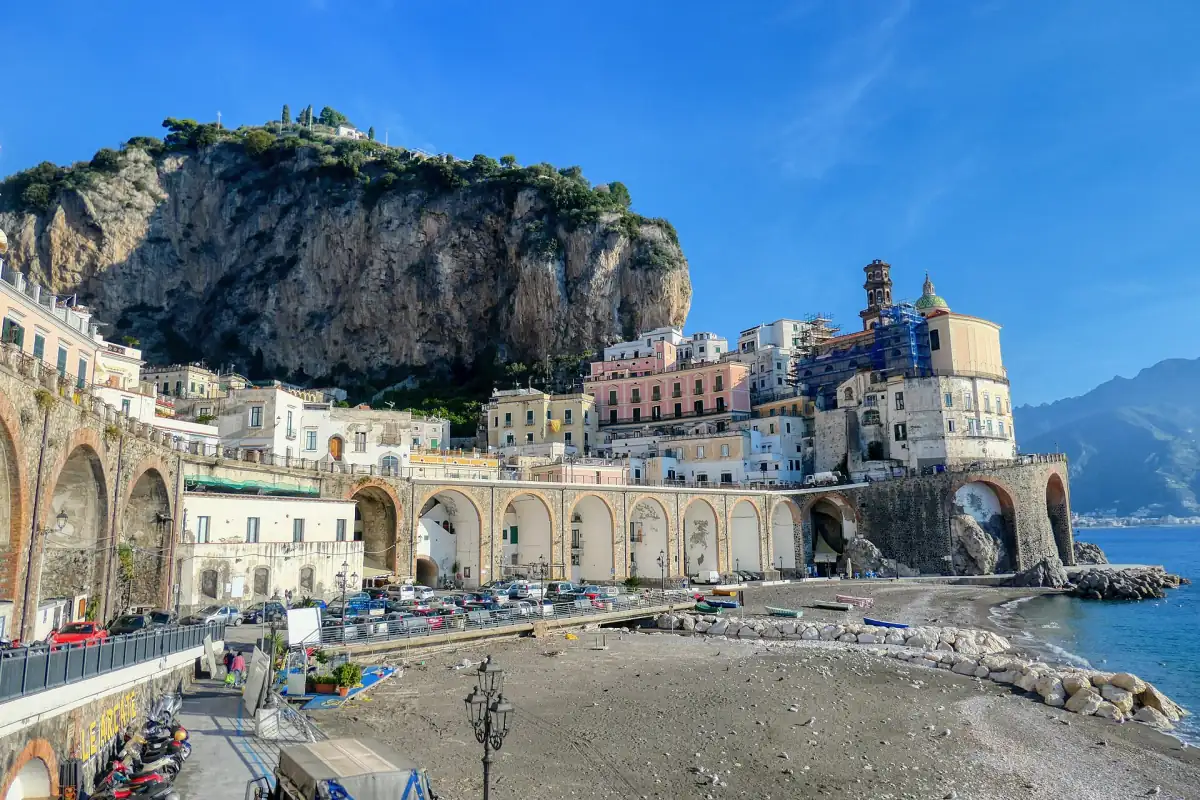
Atrani, shown in the photograph on this page, has narrow lanes and rising buildings near Amalfi. Consider it as a separate place when planning your time nearby, rather than confusing the two townscapes. The exact walk depends on your starting and finishing points, so leave the route as part of your preparation.
The minibus excursion from Naples includes a stop in Amalfi alongside Sorrento and Ravello, with Positano seen at a panoramic stop. It includes transport, a driver and guide, commentary, water and a limoncello tasting in Sorrento. Cathedral admission is separate, and food is extra. Choose that format for an organised coastal day; choose an independent arrival if the monument complex is the main reason for your visit.


Questions about Amalfi town
What belongs to the cathedral complex?
The complex includes the Chiostro Paradiso, diocesan museum, crypt and cathedral of Sant’Andrea. Give the monument visit its own space in the day.
Does the Naples excursion include cathedral admission?
It includes a stop in Amalfi and the listed transport and guiding services. A cathedral visit and its admission are separate from the town excursion.
Can I use the monument hours for a church service?
Use the church’s service information for religious attendance. The published monument cycle concerns cultural visits and its final daily time is last admission.